Co-op News
October 7, 2019
Flexibility, Speed Are Key to Indiana G&T’s Economic Development Prowess
Hoosier Energy has a stand-alone economic development website, HoosierSites.com, which is targeted to site selection consultants and local economic development organizations. It provides unique tools—like a tax abatement estimator—that make relocation easier.
For more than 30 years, Hoosier Energy’s economic development group has worked on behalf of its member distribution cooperatives to promote business investment, job creation and load growth in its Midwest service territory—and the work has paid big dividends for members and local communities.
The Bloomington, Indiana-based generation and transmission cooperative (G&T), which serves 18 distribution cooperative members across central and southern Indiana and southeastern Illinois, has focused on recruiting new companies and supporting expansion of existing ones. The success was recently recognized when Site Selection magazine named Hoosier Energy a “Top Utility” in economic development. Business Facilities magazine has named the G&T among its “Top Utilities” picks for the last three years.
“Everything we do is aimed at increasing employment opportunities, capital investment and electric load for our member systems,” says Harold Gutzwiller, Hoosier Energy manager of economic development and key accounts. “We focus on industry retention and expansion, recruitment, site development and local economic development organization support. We also market communities and specific areas in partnership with our member co-ops and encourage business attraction through local and regional economic development organizations.”
It’s Like Having an Economic Adviser on Your Side
Our work has not only increased load, but also the overall density and meters per mile for our member systems, which helps them control rates. Everything we do is focused on improving local economies by expanding the tax base, which leads to better-funded schools, better roadways and better overall public infrastructure.

In many cases, the G&T takes on a professional advisory role. “Our expertise allows us to offer a range of services like project economic impact analysis, electric rate analysis and technical guidance on infrastructure needs for power delivery.” Gutzwiller remarks. “We also conduct power quality studies and assist with contract development and negotiations.”
Since 1989, companies have announced more than $11.5 billion of capital investment, more than 50,000 jobs and 800 MW of new load in member distribution cooperatives territories. In 2018 alone, the G&T recorded 55 successes, including 14 new facilities and 41 expansions. Those projects are expected to add $730 million of investment, more than 2,500 positions and 38 MW of demand.
“Our work has not only increased load, but also the overall density and meters per mile for our member systems, which helps them control rates,” Gutzwiller adds. “Everything we do is focused on improving local economies by expanding the tax base, which leads to better-funded schools, better roadways and better overall public infrastructure.”
Decades of Focus, Relationship-Building Have Paid Off
The G&T’s economic development unit was originally set up in the 1980s to counter falling electric demand. “During the early- to mid-1970s, our member co-ops were recording average peak demand growth of nearly 10 percent per year,” Gutzwiller relates. “But from 1978 to 1988, everything came to a near standstill, due to the recession and surging energy prices. One way we decided to turn things around was to focus on increasing sales to commercial and industrial consumers.”
Over the years the G&T has built relationships with dozens of federal, state, regional and local economic development partners, and this year participated in state-level trade missions to Mexico and Japan.
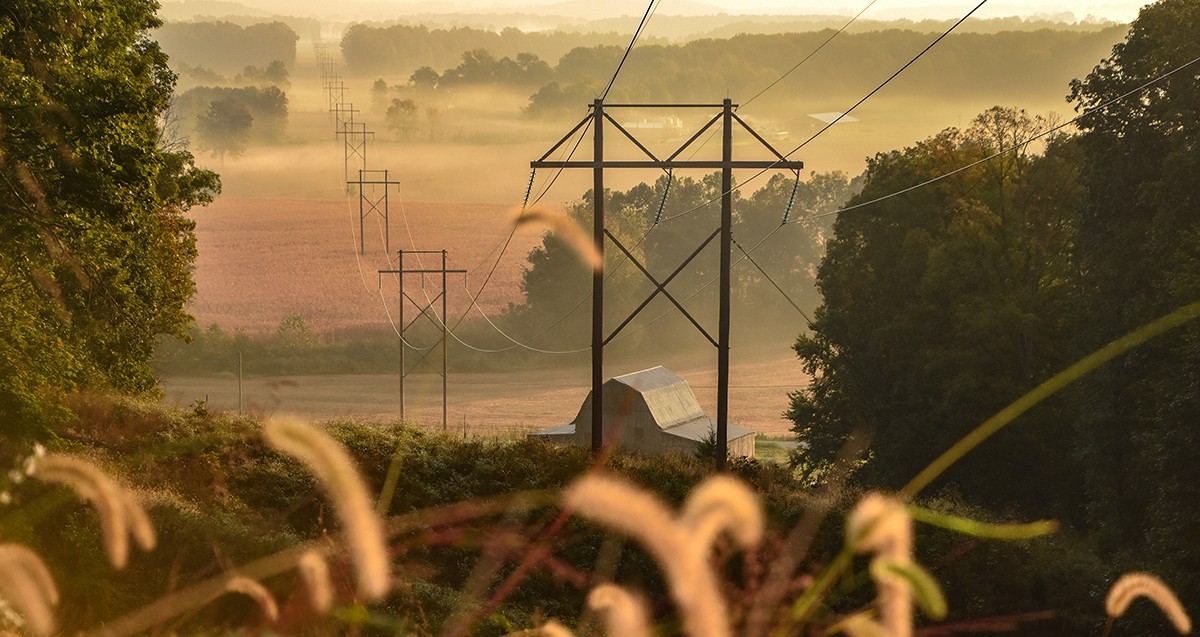 Hoosier Energy serves 18 distribution cooperative members across central and southern Indiana and southeastern Illinois.
Flexibility, Custom Contracts Are Key to Success
A large part of Hoosier Energy’s success comes from its close relationships with member cooperatives. Together they can quickly craft and implement solutions to meet commercial accounts’ needs. “Our flexibility and speed of decision-making are two of our biggest advantages,” Gutzwiller notes. “We’re not rate regulated and our board of directors can approve a special contract or a market-based rate in rapid fashion.”
In partnership with its member distribution cooperatives, Hoosier Energy can offer an economic development rider, which discounts the cost of electricity for the first six years of a project. Subject to approval by its board, the G&T can also offer a market-based rate for projects 20 MW and larger.
“On several occasions, we’ve also entered into special contracts based on the specific needs of a business, in coordination and agreement with the distribution co-op,” Gutzwiller points out. “Normally, if we don’t have to interconnect, we can get work completed pretty fast.”
Hoosier Energy also has programs in place to help commercial and industrial members meet renewable energy and carbon reduction goals. Today, 7 percent of the G&T’s generation portfolio is made up of renewables. It will grow to 10 percent by 2025.